
The Lexus Heated Steering Wheel Retrofit Guide
How a heated steering wheel retrofit works on a Lexus NX, RX, ES, IS or GS: what the upgrade adds, which cars suit it, and how to test the heater afterwards.
Read More →Guide · 10/18/2026
How a flat bottom and a round rim differ on a Lexus: which shape suits an IS, ES, RX or NX, and what changes at the wheel for a taller or shorter driver.
Two shapes cover almost every Lexus order, and the choice is about comfort rather than performance. A flat lower rim frees space where the knees sit. A round rim keeps the wheel continuous through every input. The better answer depends on the car and on who drives it.
Both shapes use the same airbag, the same frame and the same switches. What changes is the feel at the rim and the room around your legs.
A Lexus flat bottom steering wheel suits the taller driver in a low IS. It gives the cabin a sportier look without touching the chassis. The flattened lower section clears the thigh on the way in and gives the leg somewhere to rest on a long run.
Cars used mainly for quiet distance often stay round. A continuous rim turns through a bend without interrupting the grip, and it matches the calm character of an ES or an RX.
The change sits in the lower section rather than the whole wheel. The top and the sides keep their curve, and the bottom runs straighter until it meets each side.
Hand-over-hand work feels different at the base of the rim. Most drivers adapt within a day, and the diameter matters more than the shape once the car is moving.
A round rim suits a driver who turns the wheel through long arcs. Nothing interrupts the grip, and the rim passes through the hands at the same rate all the way around.
Round rims also wear evenly. Wear on a flat bottom collects at the two corners, which is where a used example usually shows its first marks.
Model and use point towards different answers. The table below covers the cars owners bring to us most often.
| Lexus and use | Shape | Why |
|---|---|---|
| IS, daily and weekend roads | Flat bottom | Knee room in a low cabin and a sportier look |
| ES, long-distance comfort | Round | Continuous rim for quiet touring |
| RX, family duties | Round | Easy control in car parks and tight streets |
| NX and GS, mixed use | Either | Depends on the driver height and the trim |
The Lexus flat bottom steering wheel question comes up most often with the IS and the F Sport trims. Drivers of those cars often want the shape to match the seats, and the practical benefit follows.
A low IS asks more of the driver on the way in than an RX does. The seat sits close to the floor, and the wheel sits close to the knees.
A flat lower section buys room exactly where that combination runs short. Owners who park in a tight garage or step into the car in a suit notice it every trip.
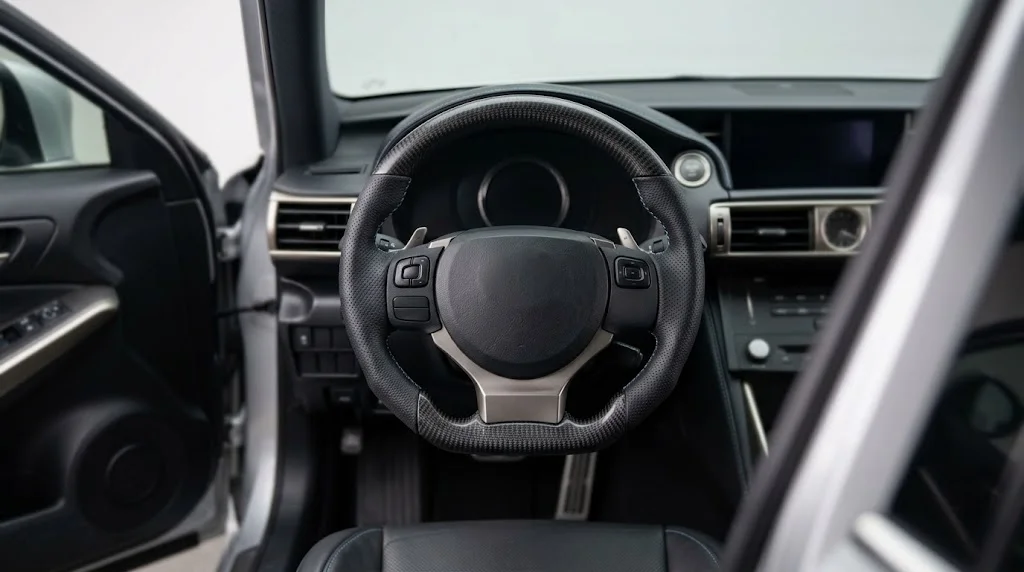
The wheel above shows the flat section in an IS cabin. The top of the rim keeps its full curve.
The lower section has a length, and it is worth recording. A tape across the straight part, from the first bend to the second, tells us where to place the seam.
Anyone moving from a round rim has no flat span to measure. In that case the diameter and the photographs do the work, and we set the flat length from the original Lexus geometry.
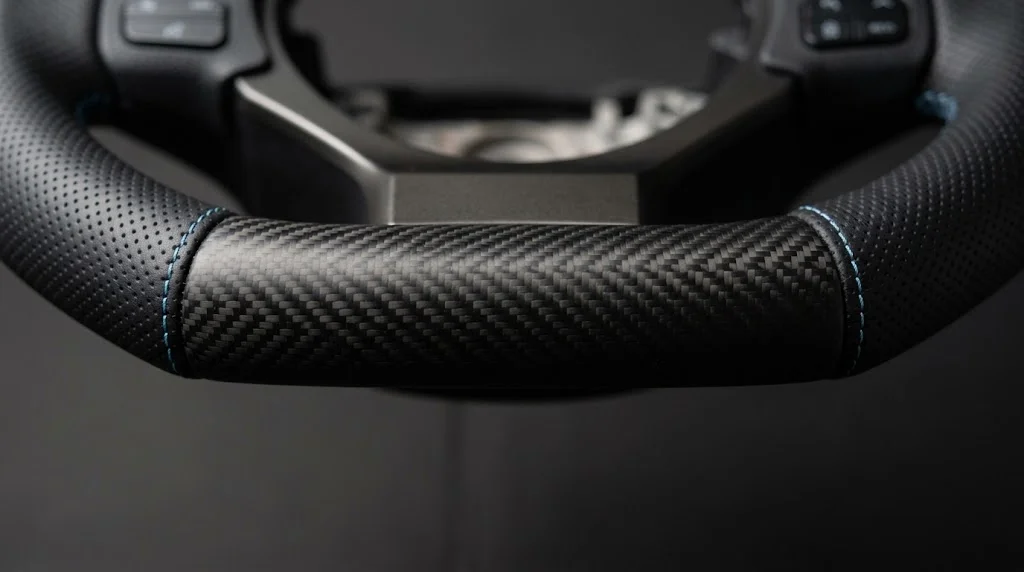
Four items answer almost every question. Send the model, the year and the grade first. Then add a daylight photograph of the wheel face, and one of the rear with the airbag out.
Have these ready before you write to us:
Those images show us the button frame, the connector shape and the space behind the airbag. Tell us whether the car is an F Sport, whether it has paddles and whether the rim is heated today. We cut nothing until the match is confirmed.
Shape decides where the hands rest, and the grips follow the shape. The nine and three positions stay in leather or the suede nap, whichever you prefer. The flat section usually takes the same material as the top.
The horn pad sits at the centre and stays where it is. Every build keeps the factory switch layout, so the palm press works exactly as it did before.
A shape change should not cost you a working switch. Every build reuses the frame and the loom already fitted to your Lexus.
| Function | Typical outcome |
|---|---|
| Airbag | Original module reused; the cover is built to suit it |
| Multifunction buttons | Retained when the original frame is reused |
| Paddle shifters | Kept on cars that have them, with cut-outs made at order |
| Heated rim | Depends on the element and grade; confirm from your car |
The heating mat and any sensing parts sit behind the rim, so each needs its own photograph. Neither can be judged from the front of the wheel.
Rebuilding your own wheel keeps the electronics exactly as Lexus assembled them. The frame, the loom and the paddles all stay standard, which is the safer route on a newer car.
A newly made core is the other option. Your factory wheel stays in the garage, which suits a leased car that has to return to standard. On an older IS, used wheels are common enough that a donor core usually costs less.
An airbag sits at the centre of this job, so give the work to someone qualified. Isolate the battery and let the car power down fully before a fastener is loosened. Follow the Lexus procedure for your chassis rather than a general guide found online.
Set the module down on something soft and away from the work area. Tighten the centre fastener to the figure in the workshop manual for your car, and treat that number as the only source. Afterwards, drive a short distance and confirm the rim sits centred.
Test every switch, the paddles if they are fitted, and the horn. A warning lamp that stays lit means the car should be read before you drive further.
Warranty questions follow any change of this kind. An aftermarket steering wheel does not automatically void a vehicle warranty under U.S. federal warranty law, but warranty coverage can still depend on whether the modification caused the specific failure being claimed.
Where the factory module, the wiring and the vehicle specific parts are reused, further coding may not be needed. The cover changes and the electronics carry on as before.
A car that gains a function it never had is the other case. The control unit may then need to learn what is present, and a workshop visit becomes likely. Coding is a possible step rather than a certainty, and your car decides the answer.
Three issues come up most often on Lexus builds. A wheel from another generation carries the same badge and a different button frame. A flat bottom ordered for a car with a heated rim needs the matting checked before the cover is cut. The reverse case appears just as often.
Driver assistance hardware is the fourth issue. Cars with hands-on detection carry sensing parts inside the factory rim, and those parts have to be reused or matched. Mention the assistance pack with your photographs and we will allow for it.
A Lexus flat bottom steering wheel and a round one both settle into ordinary use within a week. The flat section disappears from your awareness once the hands find their places, and the round rim simply feels familiar because it is.
Parking is where the difference shows again. A flat bottom gives a little more clearance when you turn the wheel at a standstill, which owners of a low IS appreciate.
No. The airbag sits behind its own cover, and the shape of the lower rim does not change how the module mounts.
Not once you are used to it. The flat section sits at six o'clock and stays clear of your hands.
Yes. Self-centring comes from the steering geometry, and the rim shape plays no part in it.
Yes, and many owners do. Shape and material are separate decisions, and we can quote either on its own.
It can, in the button frame and the trim details. Send a photograph of the face and we will confirm which frame we reuse.
Ten to fifteen working days in production, then fifteen to twenty days for shipping. Expect twenty-five to thirty-five days from order to delivery.
The workshop in Guangzhou is factory-direct, and each rim is made after an order arrives rather than held on a shelf. Thirteen or more years of design, engineering and precision manufacturing sit behind the patterns we hold. The shape you choose is checked against your chassis before the first cut.
Material, stitch and shape stay your decisions. Orders ship tracked worldwide with a three-year warranty and thirty days for returns via an RMA request. The same team answers questions through the build.
Two guides answer what owners ask next. The NX guide covers the compact SUV and its cabin trim. The RX guide explains the finishes used on the larger SUV.
The full range sits in the shop, and the Lexus pages are Lexus fitment, the IS listing and the ES listing.
Start with the car you drive and the shape you have in mind, then add the year, the option list and the two photographs. We will reply with a confirmed build and a date before we make your Lexus flat bottom steering wheel.
The catalogue holds two entries for these cars. The first is the piano black wheel listed for the IS, RC, NX and GS. The second is the round leather wheel for the RX350, GS350 and GS300. Either can be built flat or round, and that choice is the whole point of the conversation.
For background reading, the installation guide covers the battery and airbag sequence, and the FAQ collects the questions owners raise most. The about page describes the workshop, and fitment or delivery questions can go to the contact page. Lead times are listed in the shipping policy, and returns fall under the return and refund policy. The Magnuson-Moss Warranty Act sets the federal minimum standards, and 16 CFR Part 700 carries the related interpretations. Questions about shape can go through the inquiry form.
How a heated steering wheel retrofit works on a Lexus NX, RX, ES, IS or GS: what the upgrade adds, which cars suit it, and how to test the heater afterwards.
Read More →How to specify a custom Lexus NX steering wheel across the AZ10 and AZ20 generations: fitment checks, materials, paddles and coding explained.
Read More →How to specify a custom Lexus IS steering wheel across the XE10, XE20 and XE30 generations: fitment checks, materials, paddles and coding explained.
Read More →